| At a glance: Northern Ireland recorded 5,720 private admissions in Q1 2026. This was 8% lower than Q1 2025. Insured admissions fell by 16.4%, while self-pay admissions rose by 4.2%. |
|---|
In the latest of our quarterly updates, we use our unique national dataset to provide a summary of the key trends in the independent healthcare sector, covering data up to and including Q1 2026.
Key findings
- Total activity: 5,720 admissions, down 500 year on year and the lowest Q1 total level since 2023.
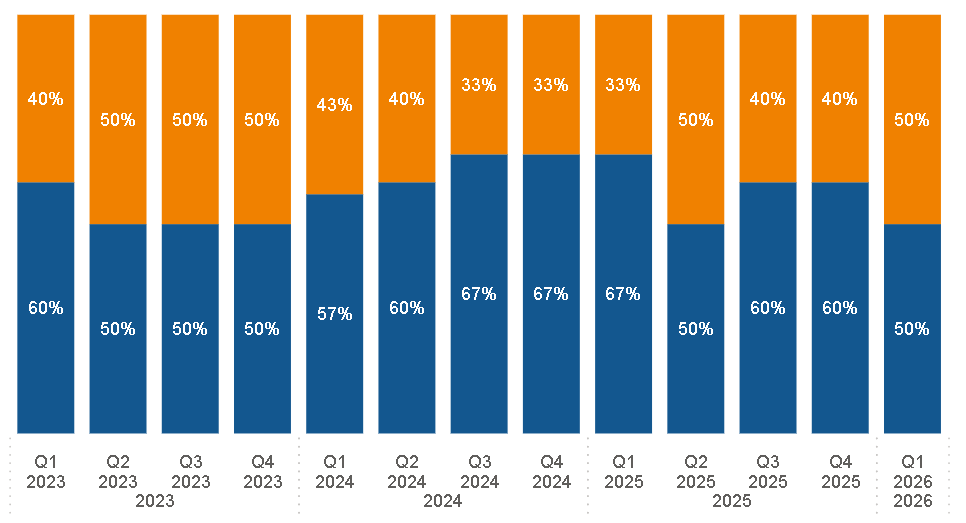
- Funding: nearly equal split between self-pay and insurance admissions.
- Self-pay: admissions reached 2,600, a quarterly figure only surpassed by Q4 2023 (2,700).
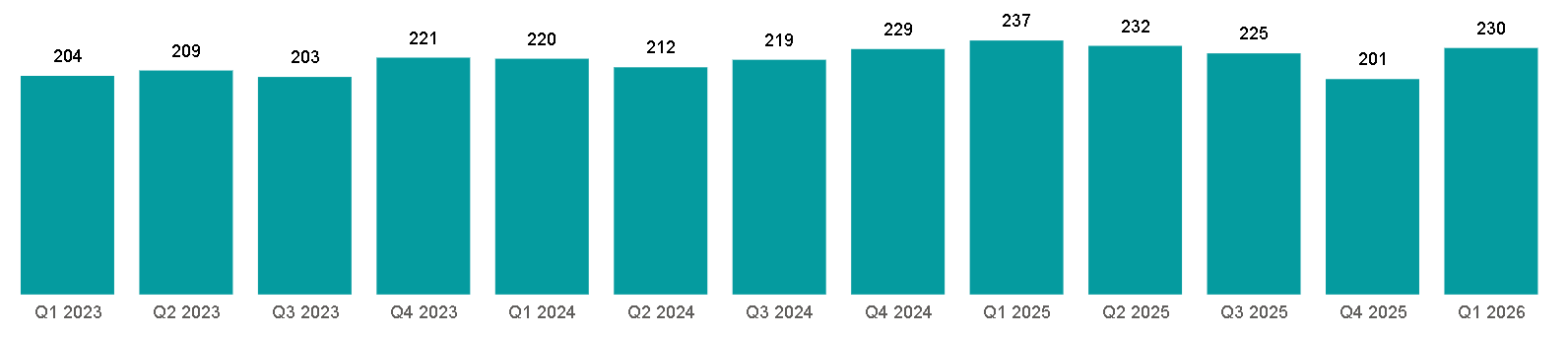
- Consultants: 230 consultants were active, 7 fewer than in Q1 2025.
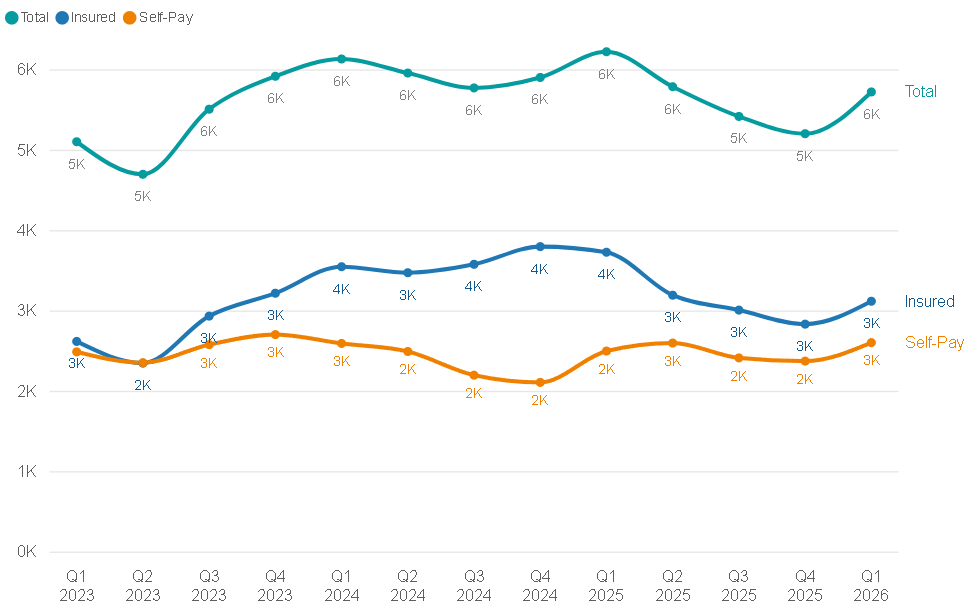
Figures shown in the chart are rounded to the nearest 1,000.
Admissions remained high, but insured activity declined
Northern Ireland recorded 5,720 admissions in Q1 2026, down 8% from Q1 2025.
Across the UK, admissions also fell in Wales by 4.7% and Scotland by 2.5%, but rose in England by 0.7%.
Different trends by payment method
- Insured admissions: down 16.4% from the record Q1 level recorded in 2025.
- Self-pay admissions: up 4.2% to 2,600, the second highest quarterly total recorded.
- Payment mix (with rounding) : 50% insured and 50% self-pay.
| Context: UK self-pay admissions increased by 7.7% compared with Q1 2025. Scotland increased by 6.6%, Northern Ireland by 4.2% and England by 9.5%; Wales fell by 13.3%. |
|---|
Five of the 10 highest-volume procedures declined
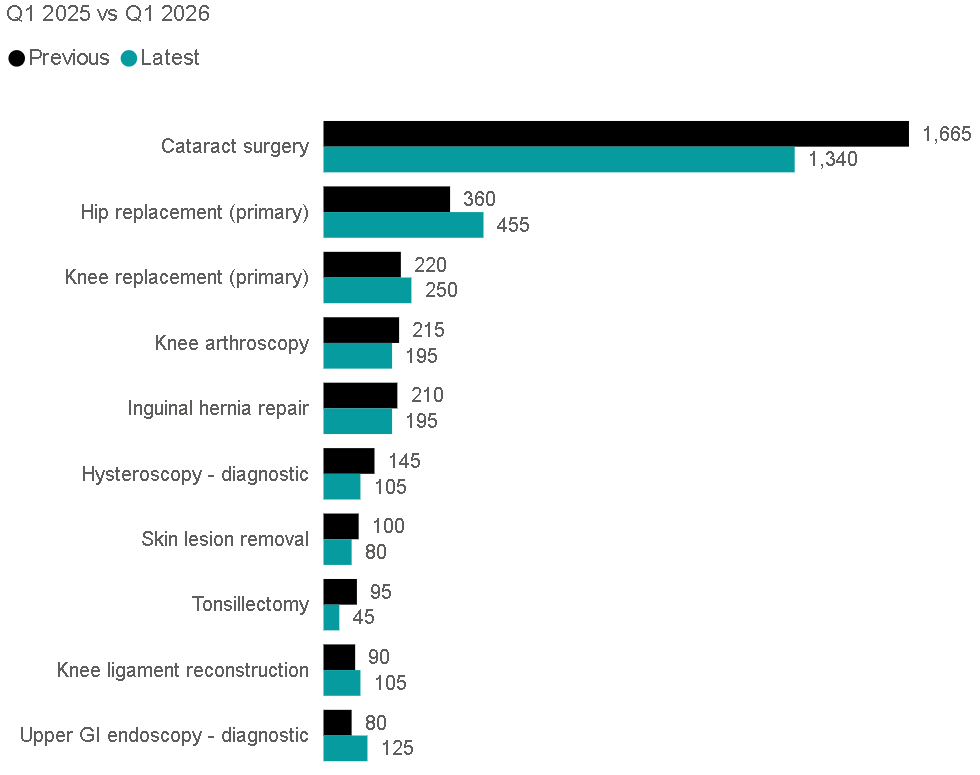
Comparing Q1 2025 with Q1 2026, admissions fell for six of Northern Ireland’s 10 highest-volume procedures.
- Largest decrease: cataract surgery fell by 325 admissions, or 19.5%.
- Largest increase: hip replacement rose by 95 admissions, or 26.4%.
- Outside the top 10: coronary angioplasty increased by 65 admissions, or 433%.
Slight fall in number of active consultants
There were 230 active consultants in Q1 2026, 3% fewer than in Q1 2025. Gastroenterology was the only named top specialty to record an increase; the others declined or were unchanged.
Patient profile
- Age: patients aged 70 to 79 accounted for the most admissions, at 1,230, although this was 140 fewer than a year earlier.
- Older age groups: every age group except 20 to 29 recorded a decline; the largest was among 70 to 79-year-olds.
- Younger age groups: admissions increased by 35 (11%) for 20 to 29 year olds.
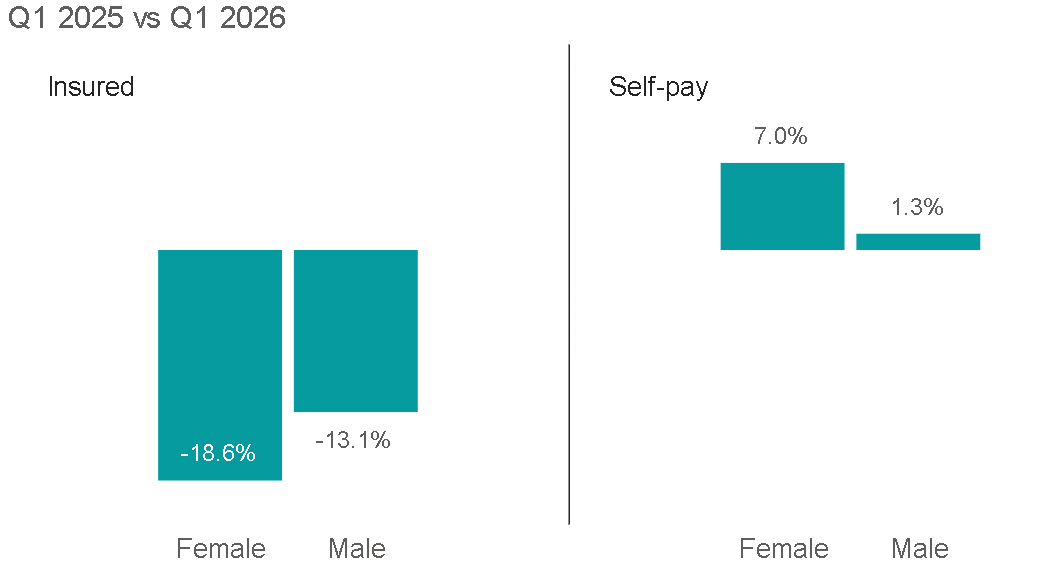
- Sex and funding: insured admissions fell by 18.6% for females and 13.1% for males; self-pay rose by 7% and 1.3% respectively.
Important notes
- PHIN’s national dataset covers inpatient and day-case discharge activity. It excludes activity outside PHIN’s mandate under the Competition and Markets Authority Order, including outpatient diagnostics, physiotherapy and mental health services.
- Data is collected, validated and processed before publication. This can create a time lag of up to six months after treatment.
- Late hospital submissions are added to future updates, so figures can change. Use the latest published update.
- Activity numbers are rounded to the nearest five. Percentages are calculated from unrounded figures.
- For historical data before 2023, contact PHIN.
| Scope: Private healthcare inpatient and day-case admissions in Northern Ireland, with comparison between Q1 2025 and Q1 2026. Q1 covers January to March. |
|---|