In the latest of our quarterly updates, we use our unique national dataset to provide a comprehensive view of the key trends in Northern Ireland’s independent healthcare sector, up to and including the end of Q2 2025.
The data covers private healthcare in-patient/day-case market activity and includes breakdowns by year for insured cases, ‘self-pay’, Top 10 procedures and demographics.
(Q1 = Jan – Mar; Q2 = Apr – Jun; Q3 = Jul – Sep; Q4 = Oct – Dec)
Private healthcare sector market activity
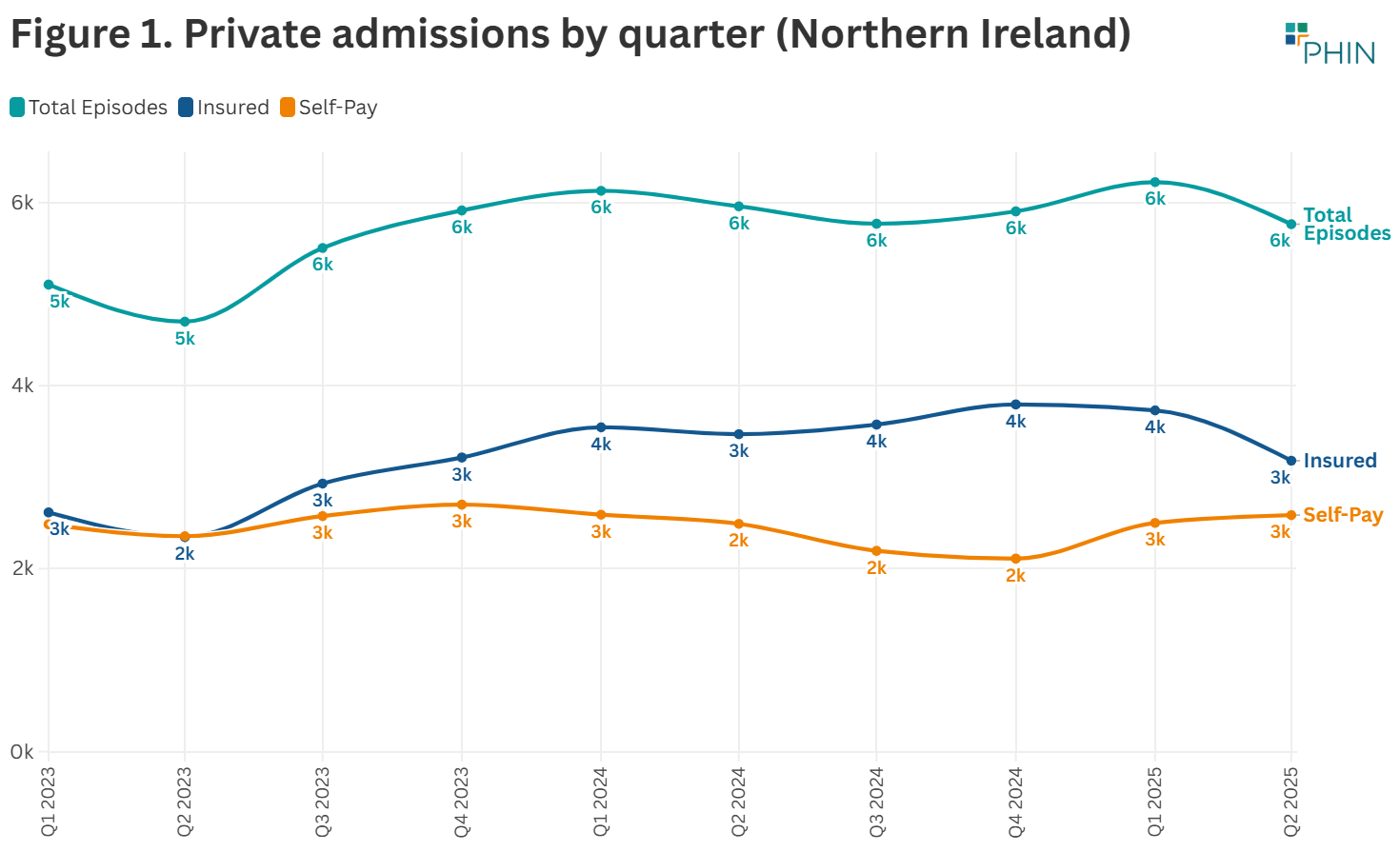
At a glance
Changes from Q2 2024 to Q2 2025:
- Reported private hospital/clinic admissions were down 3% in Northern Ireland.
- Private medical insurance admissions decreased by 8%.
- Self-pay admissions increased by 4%.
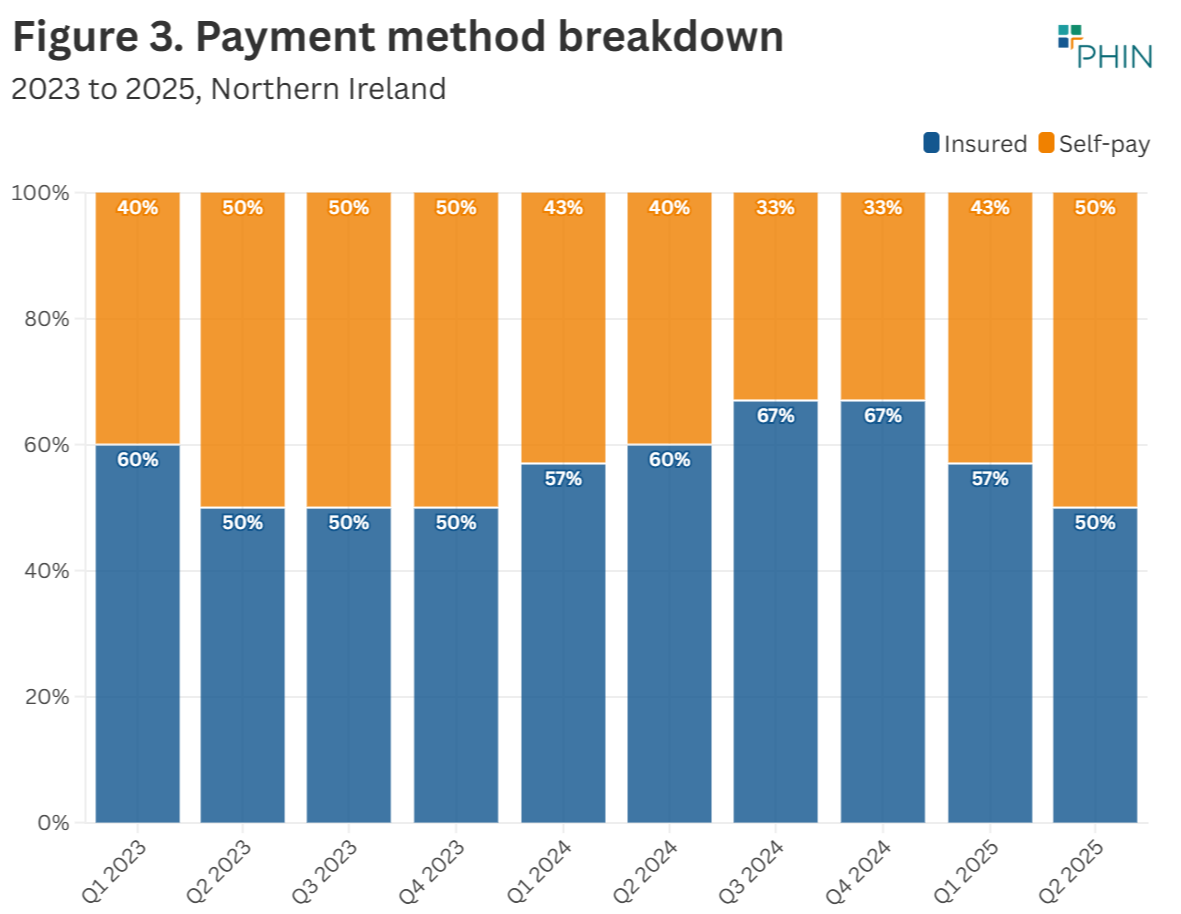
- Funding for admissions was 50% insurance and 50% self-pay.
Private healthcare in-patient admissions down in the second quarter of 2025
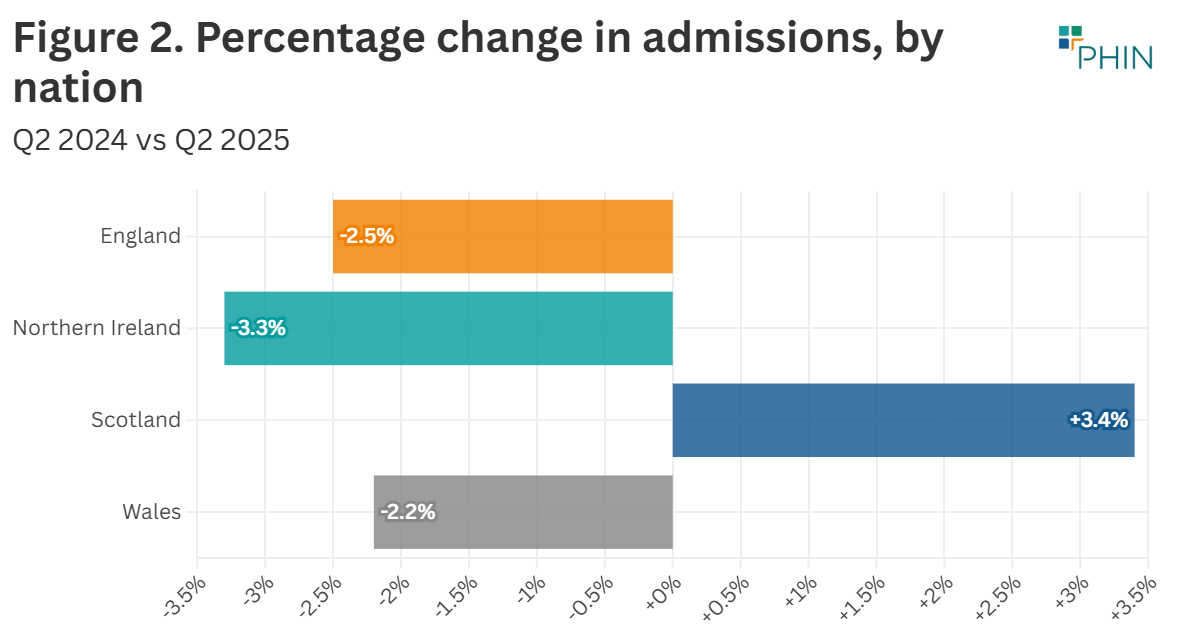
The total number of admissions in Q2 2025 was 5,765 which is the lowest total since Q2 2023 and 3% below Q2 2024. This reflects the trend across the UK with only Scotland seeing an increase.
Since Q2 2023 most Northern Ireland admissions have been funded by private insurance. While this remains the case, in the latest quarter, the gap between payment methods narrowed to its smallest since Q4 2023. Recently, the proportion of self-pay admissions has risen as insurance has decreased to 50% in Q2 2025.
Reduced number of Private medical insurance funded admissions but self-pay increases
Insured admissions
Reported admissions paid for with private medical insurance in Q2 2025 decreased by 8% compared to the same period in 2024. There were 290 fewer insured admissions than in Q2 2024 in Northern Ireland.
Insured admissions fell in Wales and every English region except one, although they rose in Scotland.
Table 1. Q2 admissions with insured payment method (rounded figures)
| Year | Insured | Self-pay |
|---|---|---|
| Q2 2023 | 2,345 | 2,355 |
| Q2 2024 | 3,470 | 2,490 |
| Q2 2025 | 3,180 | 2,585 |
Self-pay admissions
Self-pay admissions in Northern Ireland in Q2 2025 were up by 95 (4%) compared to Q2 2024, and were at the highest level since Q1 2024.
Self-pay was down in Wales and across all but three of the English regions.
Top 10 procedures
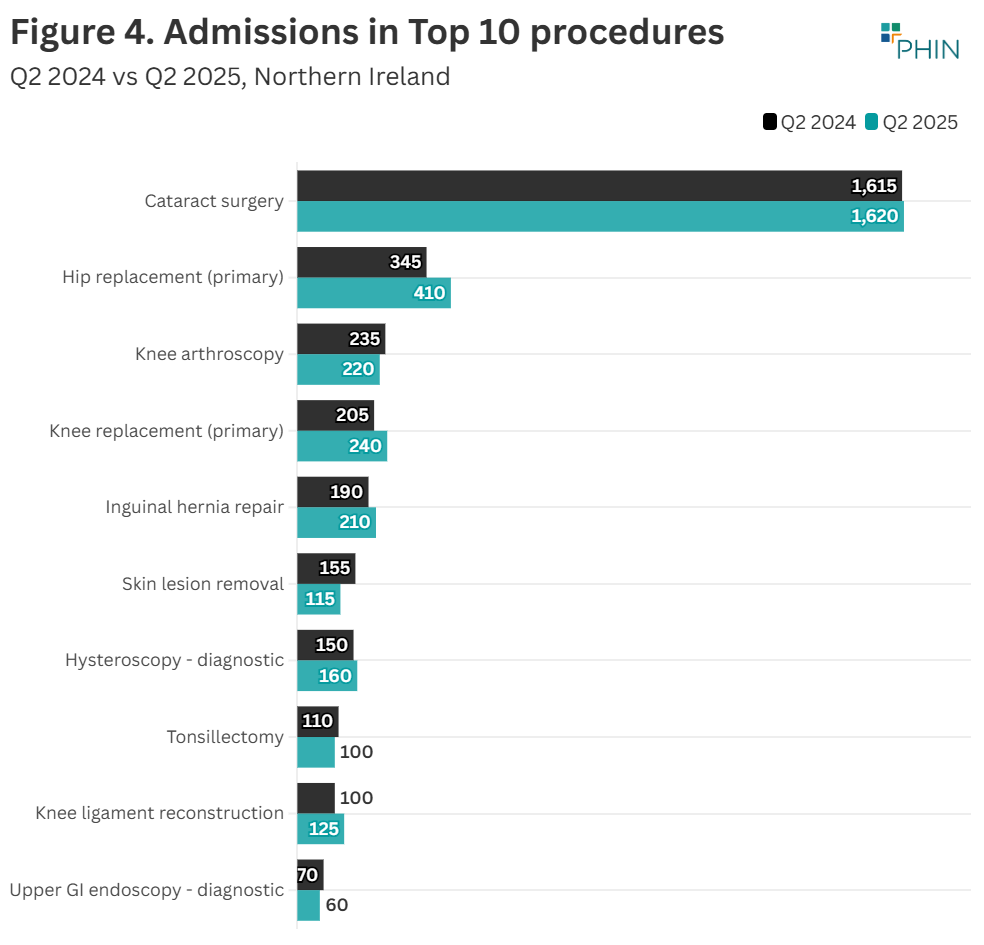
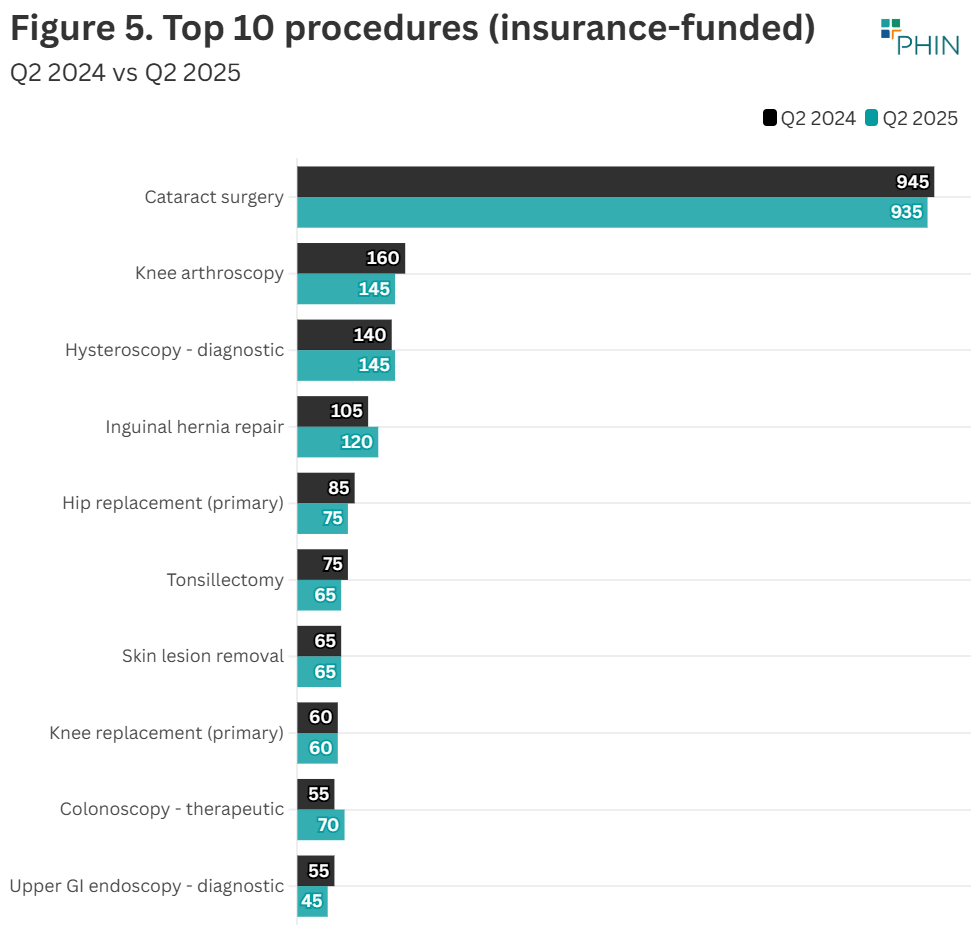
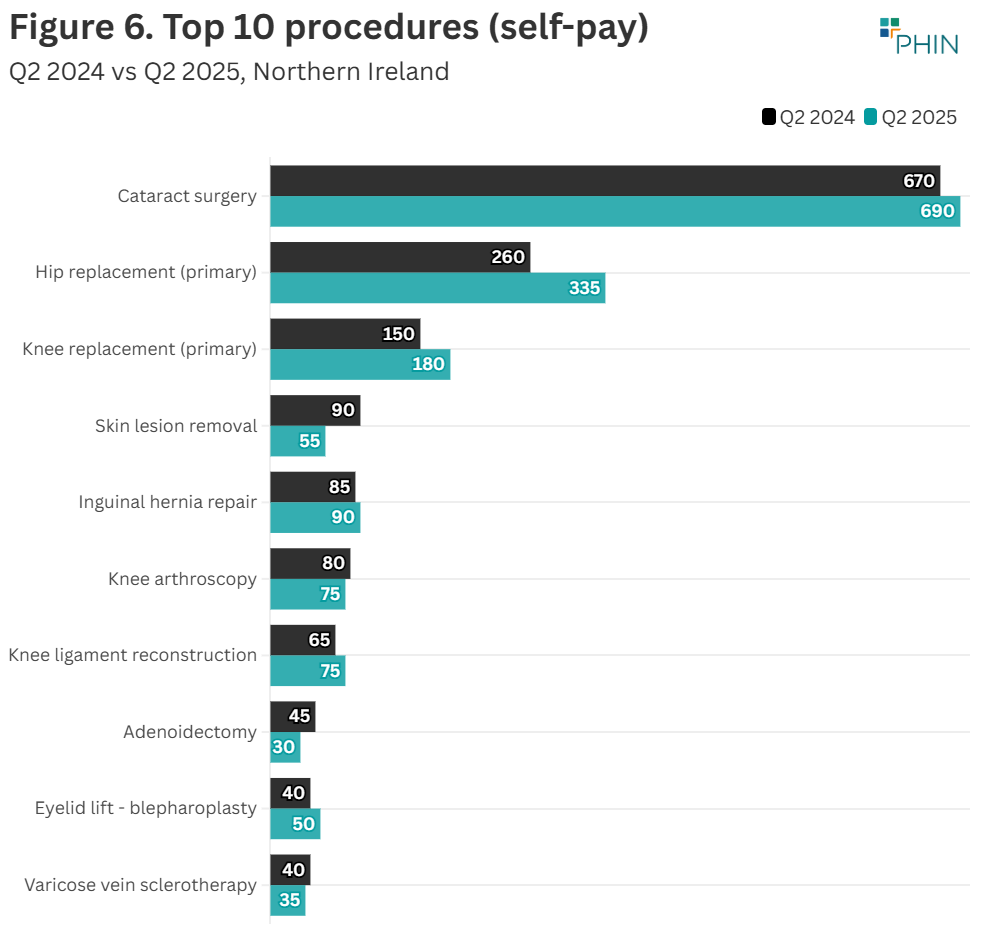
There was an increase in admissions for six of the Top 10 procedures by volume when comparing Q2 2025 to Q2 2024.
‘Cataract surgery’ (1,620 admissions) is the largest procedure by volume, but only had a small percentage increase (0.3%). ‘Hip replacement’ (410) is the second highest and increased by 18.8%. ‘Knee ligament reconstruction’ had the largest percentage increase (25%), but is a less common procedure (125).
The Top 3 procedures by volume are:
- ‘Cataract surgery’ (1,620)
- ‘Hip replacement’ (410)
- ‘Knee arthroscopy’ (220)
Active consultants in private healthcare
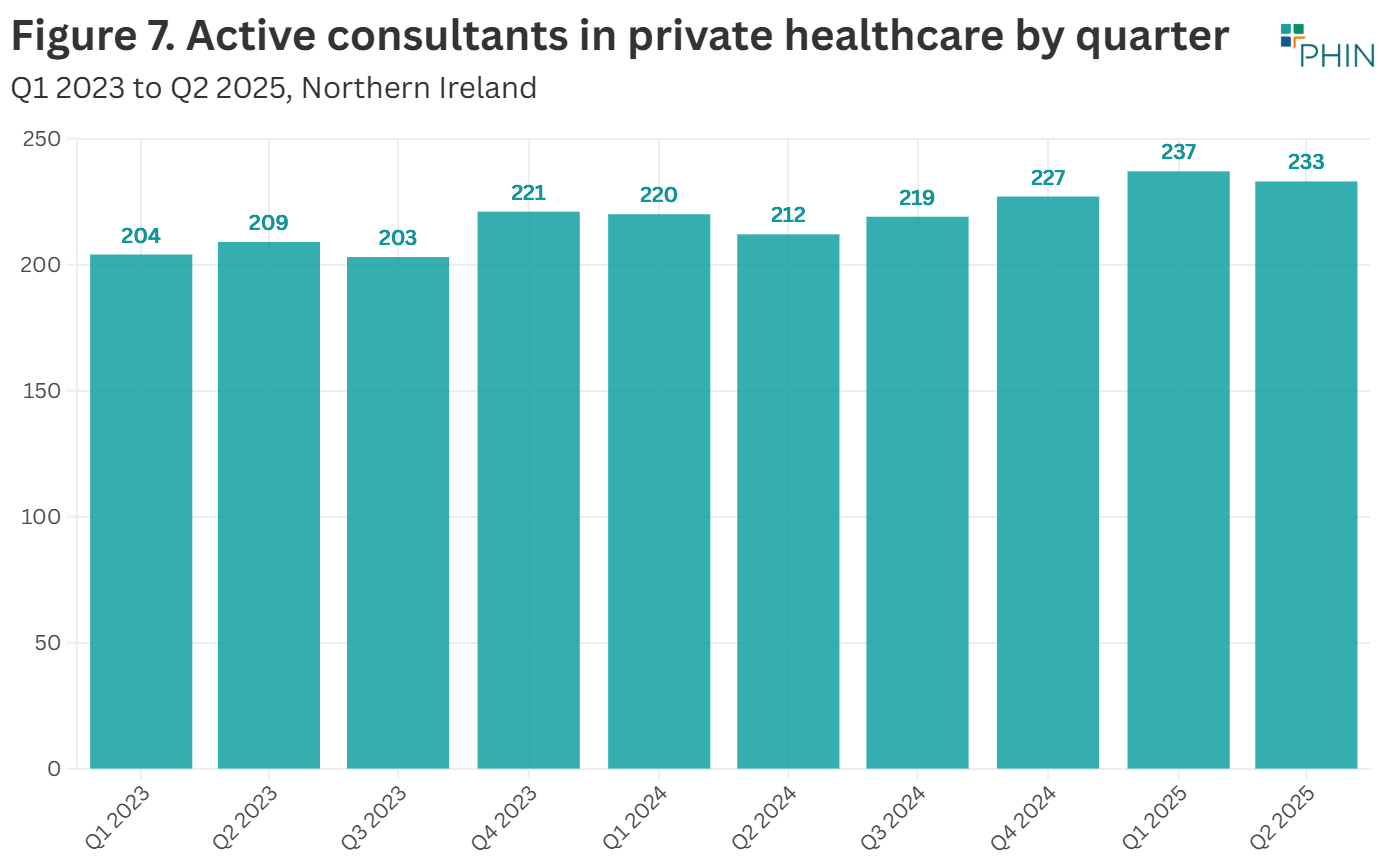
The number of consultants active in private healthcare regularly fluctuates as new consultants start working in the private sector, and existing ones go on sabbatical, stop working privately, or retire.
In Q2 2025 there were 21 more active consultants than in Q2 2024.
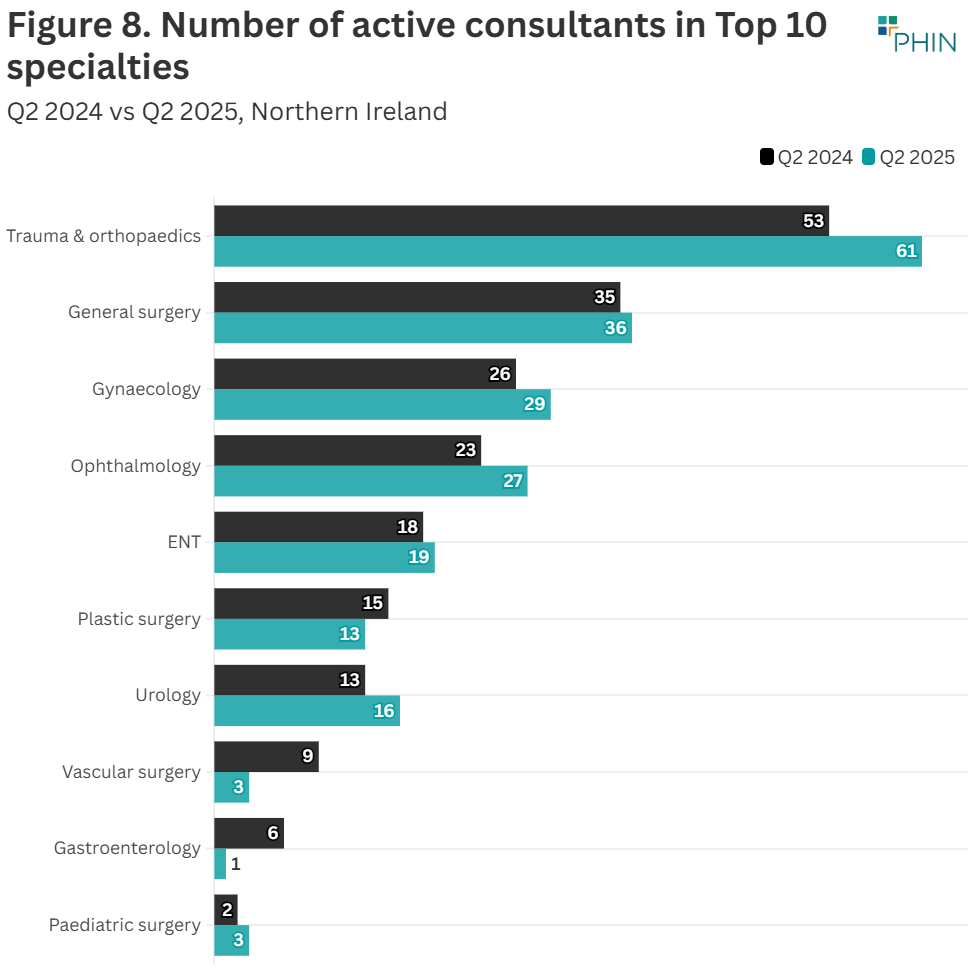
The largest volume increase in active consultants in the top 10 specialties in Q2 2025 was in ‘Trauma & Orthopaedics’ with an extra 8 consultants (15%). The biggest increase by percentage was in ‘Ophthalmology’ which was up 17% (an extra 4 consultants).
‘Vascular surgery’ (-6) and ‘Gastroenterology’ (83%) had the biggest declines by volume and percentage respectively.
Patient demographics
There was a decline of 3% in admissions for both sexes.
Looking at insured admissions, there was a decline of 5% for female patients and 13% for male patients compared to Q2 2024.
Female self-pay funded admissions rose by 1% and male admissions were up 12%.
Table 3. Volume of admissions by sex and payment method
| Sex | Admissions 2024 | Admissions 2025 | Funding type | Comparison Change % |
|---|---|---|---|---|
| Female | 1,905 | 1,820 | Insured | -5% |
| Male | 1,565 | 1,360 | Insured | -13% |
| Female | 1,405 | 1,415 | Self-pay | 1% |
| Male | 1,035 | 1,160 | Self-pay | 12% |
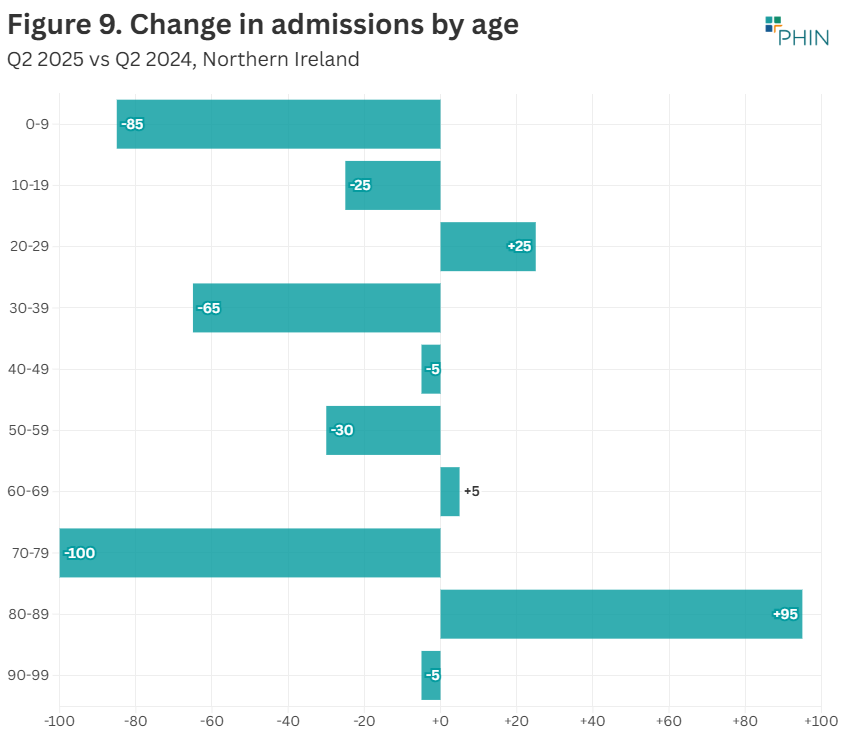
There was a decrease in admissions in all age groups except for the 20-29, 60-69 and 80-89 year olds in Q2 2025 compared to the same quarter in 2024. Of those groups, the largest volume increase (95) and percentage increase (14%) came in the 80-89 year olds.
Conversely, the largest volume and percentage decrease was in the 0-9 age group.
Important notes (updated)
All data described above is taken from PHIN’s unique, national private dataset describing discharge activity (day case and inpatient). This excludes activity outside of PHIN’s mandate from the Competition and Markets Authority, such as outpatient diagnostics, physiotherapy and mental health services.
There is a time lag between collecting, validating and processing the data we receive from hospitals before we can publish it. This can be up to six months after treatment has been completed, to ensure a fair process and accurate data.
On occasions, hospitals may submit data after our deadline. This will not be included in the current quarter’s Market Update, but will in added to future ones. For this reason, we always recommend only using figures from the latest Update as they can change.
For ease of use, we have reduced the number of years of data shown in the Market Update, if you would like pre-2023 data, please get in touch.
Activity numbers have been rounded to the nearest five, with percentage based on the unrounded figures.