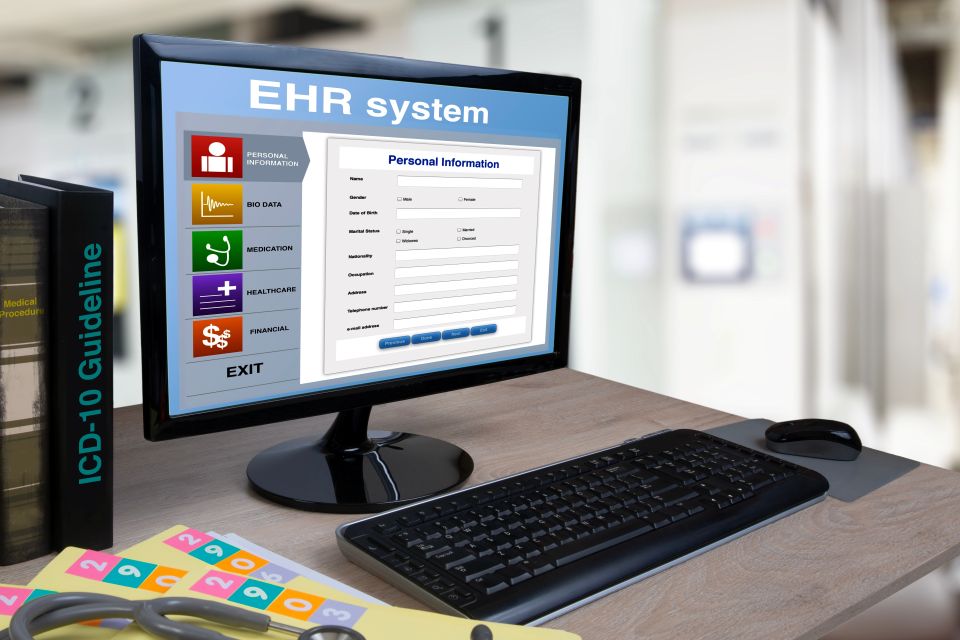
In the ever-evolving landscape of healthcare, electronic patient records – commonly referred to as Electronic Health Records (EHRs) – have emerged as a significant innovation. EHRs centralise, update, and manage patient information digitally in real time, fundamentally changing both the NHS and private healthcare systems.
By enabling efficient information management and seamless sharing among authorised healthcare personnel, EHRs are set to improve both the quality of patient care and the efficiency of healthcare operations.
What are Electronic Health Records (EHRs)?
EHRs are, in essence, digital versions of patients’ traditional paper charts. They serve as comprehensive stores, gathering a wide array of patient data – such as diagnoses, medications, treatment plans, immunisation dates, allergies, radiology images, and laboratory test results – into a single, centralised system.
These records are designed to be accessible and updatable by authorised healthcare professionals across various facilities, ensuring continuity and consistency of care. EHRs function across different IT systems and support care coordination, personalisation, and patient safety, all while maintaining robust privacy and security controls.
The features and components of EHRs
EHR systems incorporate several features that enhance healthcare delivery. They include patient demographics, medical histories, progress notes, medication lists, vital signs, past medical records, immunisations, laboratory data, and radiology reports.
Integration with other health technologies – such as laboratory, radiology, and pharmacy systems – ensures that all relevant providers have access to up-to-date and consistent patient information.
The centralisation of data not only streamlines workflows but also allows for quick retrieval of comprehensive patient information, particularly critical in emergency situations. Real-time updates ensure the accuracy of records and facilitate communication among healthcare providers, reducing errors and enhancing patient safety.
Benefits for patients
The primary benefit for patients is that all their information will be to hand for the healthcare professional they are talking to, and they will not need to continually repeat themselves or remember every detail of their condition, medication or treatment so far.
EHRs also empower healthcare providers to create personalised treatment plans based on a patient’s complete medical history. This tailored approach leads to improved health outcomes, especially for those with chronic conditions that require individualised care strategies.
By providing a holistic view of a patient’s health, EHRs enable the development of care plans that meet specific needs and circumstances.
Benefits for healthcare providers
With all necessary information combined in one place, healthcare providers can make informed decisions efficiently and effectively. The integration with other clinical systems ensures consistent and up-to-date information sharing, while real-time updates reduce the risk of outdated records influencing treatment decisions.
EHRs also streamline administrative tasks, allowing providers to dedicate more time to patient interaction and care, which improves overall patient experience and operational efficiency.
Enhancing patient safety
One of the primary advantages of EHRs is improved coordination among healthcare professionals. Access to shared, accurate information reduces the likelihood of medical errors – such as incorrect prescriptions or missed diagnoses – by ensuring that all providers are informed and aligned on treatment plans.
Automated alerts and reminders further help prevent drug interactions and promote adherence to clinical guidelines, contributing to a safer healthcare environment.
Security and privacy of EHRs
Transitioning to electronic records raises important concerns about privacy and confidentiality. EHRs are equipped with strong security measures, including encryption, user authentication, and access controls, which restrict sensitive data to authorised personnel only.
Regular audits, monitoring, and staff training reinforce these protections, safeguarding patient trust and ensuring compliance with data privacy regulations. Policies should be in place to balance improved access to information with rigorous privacy standards.
Patient rights and engagement
Patients have the right to understand how their information is used and shared. EHR systems frequently include features that enable patients to provide consent for specific uses and to access their own records.
This transparency encourages patient engagement in health data management, building trust and fostering active participation in healthcare decisions.
Challenges to EHR adoption
Despite their benefits, there are several hurdles to widespread adoption of EHRs. Transitioning from paper records is complex and costly, especially for private hospitals and smaller facilities.
Challenges include the expense of new software and hardware, the need for staff training, technical reliability concerns, workflow disruptions, and the intricacies of migrating existing paper records to digital formats.
Comprehensive change management strategies, careful data migration, and ongoing support are essential to overcoming resistance and ensuring successful implementation. While initial setup costs can be high, the long-term gains in efficiency and care quality often justify these investments.
The future of EHRs
Ongoing advances in health information technology continue to shape the future of EHRs. Innovations, including artificial intelligence and machine learning, are being incorporated into EHR systems to enable predictive analytics and support better clinical decision-making.
Greater emphasis on patient engagement is emerging, with features such as patient portals that offer access to records, appointment scheduling, and direct communication with healthcare providers.
These advancements aim to create a more connected, patient-centred ecosystem, empowering individuals to actively participate in their healthcare and driving improvements in outcomes and efficiency.
Conclusion
Electronic patient records are revolutionising healthcare delivery by improving efficiency, enhancing patient care, and safeguarding privacy. Their adoption marks a significant step towards a more integrated, high-quality healthcare system. By prioritising ongoing innovation, robust security, and patient engagement, the healthcare sector can fully realise the transformative potential of EHRs and pave the way for a healthier future.
Frequently Asked Questions
What is an Electronic Health Record (EHR) and how does it differ from paper records?
An EHR is a comprehensive, real-time digital repository of a patient’s health information accessible to authorised professionals. Unlike paper charts, EHRs centralise data, update instantly, can integrate with other clinical systems, and support data-driven, coordinated care while reducing errors associated with manual record-keeping.
Which EHR features most directly improve patient care and safety?
Key features include real-time updates, centralised access to complete patient histories, and interoperability with labs, radiology, and pharmacy systems for consistent information sharing. Automated alerts and reminders help prevent drug interactions and guide guideline-adherent care, while rapid data retrieval supports faster, safer decisions and more personalised treatment plans.
How do EHRs protect patient privacy while enabling necessary access?
EHRs use strong security controls combined with regular monitoring and staff training. Policies ensure information is accessed only for authorised purposes, and patients can review records and provide consent for specific data uses, maintaining transparency and trust.
What are the main challenges of implementing EHRs, and how can organisations address them?
Challenges include high upfront costs (software, hardware, training, maintenance), technical issues and downtime, workflow disruption and user resistance, and complex data migration. Mitigations involve leveraging long-term efficiency gains and policy incentives, establishing contingency plans and regular system maintenance, providing comprehensive training and change management, and using careful migration strategies that prioritise data accuracy and completeness.
What future trends will shape EHRs?
EHRs are moving toward AI-augmented decision support and predictive analytics to identify patterns and improve diagnoses, alongside stronger patient engagement through portals for record access, scheduling, and provider communication. These trends aim to create a more connected, efficient, and patient-centred healthcare ecosystem.