When we think about innovation in healthcare, we tend to picture new technology or pioneering treatments. But what about an approach that has been alongside us for around 15,000 years?
Dogs are becoming an increasingly familiar presence in healthcare settings, as part of a growing focus on patient experience. As demand for visits from our four-legged friends rises across hospitals, attention is turning to the role they play in care and what the evidence shows.
How can dogs help in healthcare?
Dogs in healthcare can have very different jobs.
Assistance dogs support people with disabilities or long-term health conditions, while medical detection dogs are trained to identify specific physiological changes linked to illness.
Therapy dogs are usually brought into healthcare or care settings alongside trained handlers to support emotional wellbeing and comfort. That may involve helping children feel calmer before procedures or encouraging engagement during rehabilitation.
What the evidence says
The clearest evidence for therapy dogs currently relates to anxiety and distress reduction, particularly among children.
A 2025 clinical trial in a paediatric emergency department found that children who received a short therapy dog visit alongside standard support reported greater reductions in anxiety than children receiving standard care alone.
Researchers have also explored the use of therapy dogs in dementia care and mental health settings. Some studies suggest they may improve mood and patient engagement.
Making it work safely
The Royal College of Nursing says that organisations should have clear policies and risk assessments in place before dogs are allowed into healthcare settings, including safeguards for patients, staff, visitors and the animals themselves.
Not every patient will welcome contact with a dog. Some people may have allergies, phobias or clinical vulnerabilities that need to be considered. Healthcare organisations also need to think about infection prevention and animal welfare, as well as whether handlers have appropriate training.
As with any healthcare intervention, the potential benefits need to be balanced against practical considerations and individual patient needs.
Growing demand in hospitals
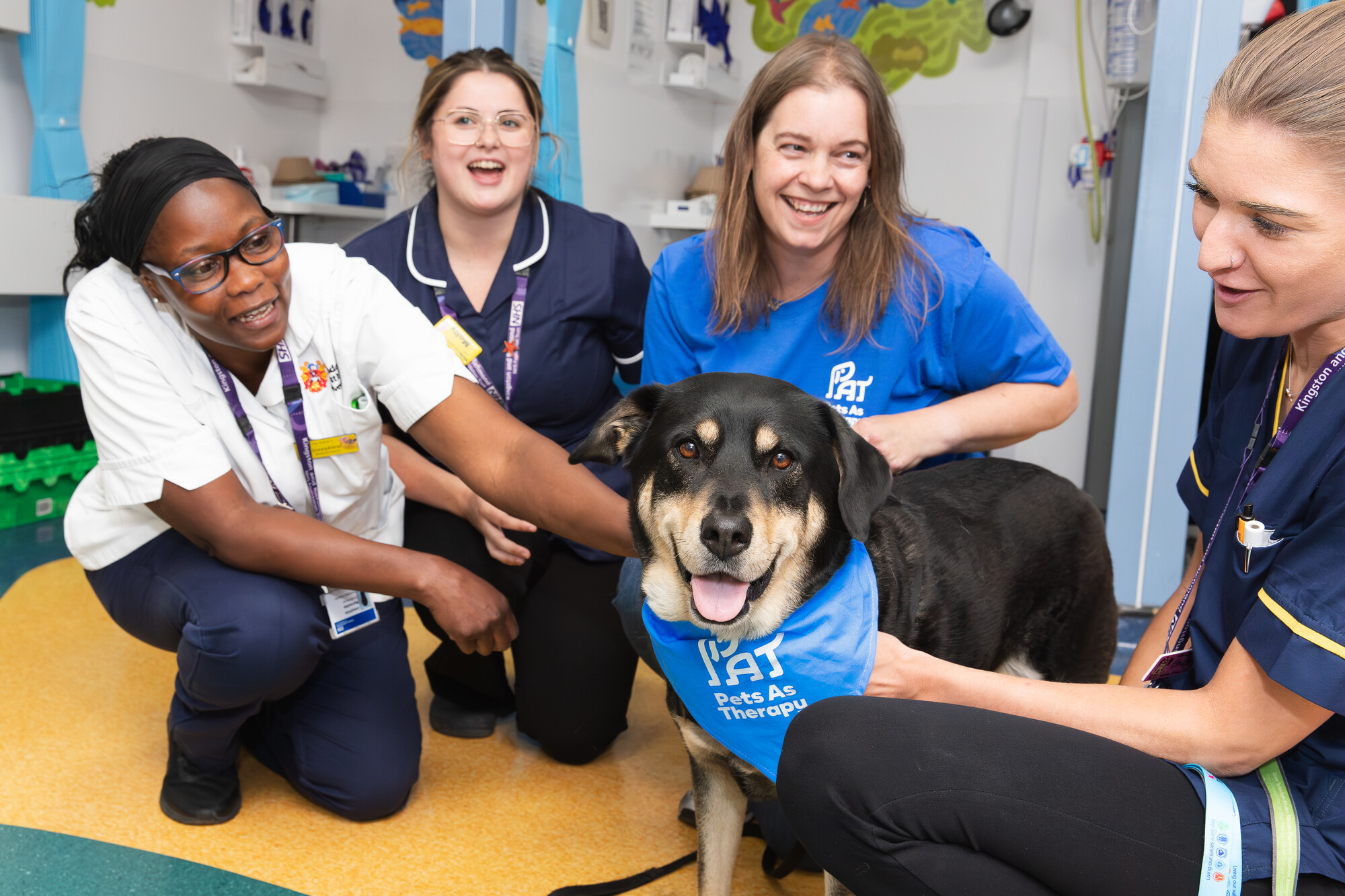
Hospitals generally access therapy dog services through specialist charities, which recruit and assess volunteers and their animals before arranging visits to hospitals.
Pets As Therapy (PAT) , one of the UK’s largest therapy animal charities, told PHIN that hospitals remain one of its most important settings. According to the charity, 385 NHS active establishments currently receive visits from PAT volunteers, while around 1,237 volunteers support NHS hospital visits across the country.
The charity is also active in 23 private hospitals and says a further 19 private hospitals are currently waiting for volunteers before visits can begin.
“Hospitals remain one of the most important settings in which Pets As Therapy delivers its services. Through the dedication of our volunteers and their pets, we provide comfort, companionship and moments of joy to patients, visitors and healthcare staff across the UK. Demand has grown in recent years, and we are actively seeking more volunteers to join us.”
Steven Wibberley, Chief Executive of Pets As Therapy (PAT)
While PAT is only one provider of therapy animal services, the figures suggest there is significant appetite for therapy dog visits across healthcare settings, and that demand may even be currently outpacing the availability of volunteers.
More than just a friendly face
As healthcare providers place increasing emphasis on patient experience alongside clinical outcomes, therapy dogs offer an interesting example of how small interventions can make a difficult environment feel more human.
Improving the patient experience does not always require new technology or a major redesign. It can be as simple as a few minutes of companionship at the right moment.
And you’re reading this with a calm dog curled up beside you, volunteering together could be one way to bring comfort to people when they need it most.

References
- Kelker, H. P. et al. (2025). Therapy dogs for anxiety in children in the emergency department: a randomized clinical trial . JAMA Network Open, 8(3), e250636.
- The role of animal assisted therapy in the rehabilitation of mental health disorders: a systematic literature review (2024). Perspectives in Integrative Medicine, 3(3), pp. 142–151.
- Yakimicki, M. L. et al. (2018). Animal-assisted intervention and dementia: a systematic review . Clinical Nursing Research.
- Royal College of Nursing (2025). Working with dogs in health care settings .
- Pets As Therapy. https://petsastherapy.org