When it comes to private healthcare, peoples' biggest question is often can I afford it? New patients want to know whether it is even worth looking into, or whether they should stay with the NHS.
Private healthcare costs can vary widely. Many factors affect the cost including the different hospitals and consultants you can choose, your payment options, and your personal situation. This can be confusing for people who are not used to thinking about healthcare and money together when the NHS is free at the point of use.
Feeling overwhelmed by the idea of 'going private'
Are you considering private healthcare but feeling overwhelmed by the potential costs? You're not alone. Many people find themselves asking, "Can I afford to go private?" The truth is, private hospital fees can be confusing, with multiple factors influencing the final amount. To help you make informed decisions, we've created a straightforward guide to private hospital costs that breaks down what to expect and what you need to budget for.
Our guide offers a summary of how private hospital costs in the UK are made up. It highlights the typical bills you might receive, from the hospital itself, your consultant, and the anaesthetist. We explain why these separate invoices matter and how understanding them can empower you to manage your expenses without any nasty surprises.
Search for a consultant or hospital
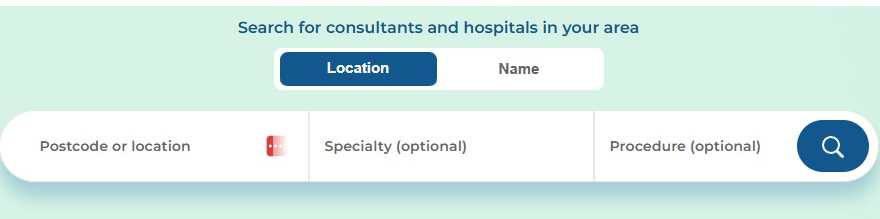
We know that navigating the world of private healthcare can feel daunting. That's why we encourage you to use PHIN’s search tool, which enables you to check costs by consultant, location, or procedure and to check out the hospitals they work at. With this resource, you can get ahead of the curve and plan your healthcare journey with confidence.
Don't let uncertainty hold you back from exploring your options. Discover our comprehensive guide to hospital costs today and take the first step towards transparent, manageable private healthcare costs.
There's more detail in the guide, but here's a quick look at the type of information you'll be getting:
FAQs about hospital bills
What are the main components of a private hospital bill in the UK?
Private hospital bills typically consist of three separate charges: one from the hospital, one from the surgeon, and one from the anaesthetist. Knowing this structure helps patients to understand and manage expected fees, as people often expect a single invoice, so don't budget for the full amount.
How do 'package prices' and 'itemised billing' differ for private healthcare?
‘Package prices’ offer an 'all-inclusive' fee covering the main costs such as surgeon, anaesthetist, and hospital services, making budgeting easier and more predictable. In contrast, ‘itemised billing’ charges separately for each service provided, which is less common and can result in unpredictable costs for self-pay patients.
What should insured patients check to avoid unexpected shortfalls in payment?
Insured patients should verify if their consultant is ‘fee-assured’ with their insurer. This means the consultant has agreed to keep fees within the insurer’s limits, thus avoiding the risk of a shortfall, where the consultant’s bill exceeds the insurance coverage.
Why is it important to ask for a written quote before agreeing to treatment?
A written quote provides clarity on what is included or excluded from the proposed price, helps compare hospitals, and prevents unexpected bills, especially regarding complications or services not part of the initial agreement.
What costs are typically not included in private hospital 'package deals'?
Most ‘package deals’ exclude the initial consultation fee, take-home medications, extra hospital nights, and certain diagnostics or pathology tests, which patients should clarify to avoid being caught out by additional charges.