Summary
This guide will help you understand cardiac surgery in private healthcare in the UK. It will show you how you can have more control over when and where you get treatment, as well as who your specialist is.
Wondering about your options for private heart surgery?
Facing heart surgery is a daunting prospect, and long NHS waiting lists can often add to the anxiety. If you or a loved one needs a cardiac procedure, you might be wondering about all your options.
This guide answers the crucial questions that arise when navigating private healthcare options:
- How does the process work?
- What are the realistic costs?
- And how can you find a surgeon you trust?
We provide clear, straightforward answers to help you understand the practical steps, ask the right questions, and make an informed decision that feels right for you and your family.
NHS vs private cardiac care
Receiving a diagnosis for a heart condition is difficult enough without the added stress of a long wait for treatment. For many, this is the primary reason for exploring private healthcare. The central difference between private cardiac surgery and the NHS isn't the quality of the surgeons (world-class experts work in both sectors), but rather the trade-offs you make regarding speed, cost, and control.
Making an informed decision starts with understanding these trade-offs. While the NHS provides excellent care that is free at the point of use, you may face significant delays. Opting for private care means you are paying to reduce that waiting time and gain more say in your treatment plan.
Here’s a simple breakdown of the key differences:
- Wait time: Months or even over a year on the NHS or typically a matter of weeks privately.
- Cost: Free at the point of use on the NHS or self-funded or paid for by private health insurance.
- Choice: You are usually assigned a surgeon and hospital within the NHS, whereas the private route allows you to choose your specific surgeon and facility.
This ability to choose your surgeon is one of the most significant benefits of choosing private cardiac care. It allows you to research an individual's experience, success rates, and approach to care, giving you a greater sense of confidence and control.
The 5 step path to private heart surgery: From your GP to the operating theatre
Navigating the world of private healthcare can seem complicated, but for private cardiac surgery, the route is actually quite well-defined. It’s a clear, step-by-step journey from your initial concern to your recovery, designed to ensure you get the right specialist care at the right time.
This private cardiac consultation process almost always begins with your GP. From there, the path typically involves five key stages:
- Get a GP referral: Your GP assesses your situation and provides a referral letter, which is necessary for most private specialists and insurers.
- Choose and book a private cardiologist: You select a heart specialist who diagnoses conditions.
- Undergo diagnostics: The cardiologist arranges tests like ECGs or scans to pinpoint the exact problem.
- Choose your cardiac surgeon and hospital: If surgery is needed, you're referred to and can select a surgeon and facility.
- Schedule your procedure: You book the surgery date at your chosen private hospital.
A key distinction exists between the first two specialists you will meet. A cardiologist is like a 'heart detective'. Their job is to investigate your symptoms, run diagnostic tests, and determine exactly what is wrong with your heart and whether it requires surgery.
Only after the cardiologist has confirmed a surgical solution is needed will you be referred to a cardiac surgeon. The surgeon is the 'expert operator' who physically performs the procedure. This is a crucial part of choosing a private cardiac surgeon:
- You see the 'detective' first to get a clear diagnosis, and then
- You choose the specialist who will carry out the repair.
Once your surgeon has confirmed the treatment plan, you’ll receive a detailed breakdown of the procedure and associated costs.
How much does private heart surgery cost? A guide to self-funding in the UK
With a surgical plan in hand, the question of how much does private heart surgery cost in the UK becomes much clearer. While prices vary based on the hospital, surgeon, and complexity of your procedure, you can use some general figures as a guide. For example, a single coronary artery bypass might range from £20,000 to £25,000, whereas a more intricate aortic valve replacement could be upwards of £40,000. These figures give you a realistic starting point for your financial planning.
Most private hospitals offer a ‘ package price ’ for your surgery. This means you get one bill covering things like the surgeon’s and anaesthetist’s fees, hospital accommodation, nursing care, and the operation itself.
However, they don’t all include the same thing, so it’s worth making sure you’re clear what the package includes. For example, does it include initial consultations and pre-operative diagnostic tests? The cost of treating any unforeseen complications which may require a longer hospital stay are often billed separately.
If you choose to pay ‘out of pocket’, this is known as self-funding your procedure . You are responsible for paying your bill. The hospital will usually require payment before you are admitted.
Self-pay can be funded from your savings or you may have to consider taking out a loan. There are companies that offer specialised medical loans for this sort of situation.
The alternative way to pay is by using a private health insurance policy.
Will my private medical insurance cover heart surgery?
If you have private medical insurance , you might think you’re covered for your heart procedure. However, policies have specific rules, especially for major procedures. The most common hurdle is the 'pre-existing condition' clause. This means your insurer may not cover a health problem you had before you took out the policy.
Some policies will require you to wait a year or two before they will consider covering pre-existing conditions. You should always check your policy documents is the essential first step.
Before any appointments or tests, contact your insurer to get a formal ‘pre-authorisation’ code. This code proves that your insurer has agreed to pay for your treatment. Without it, you risk being held personally responsible for the entire cost of your private cardiac surgery, even if your condition is covered.
To avoid any unwelcome surprises, call your provider with your policy number and your consultant’s letter handy. These three questions can help you get a clear answer as to whether you are covered:
- Is my specific diagnosis (e.g. coronary artery disease) covered under my plan?
- Do I have any policy excess to pay or benefit limits for this type of surgery?
- What is the exact process for getting pre-authorisation for my consultation and procedure?
What is a heart 'bypass' or 'valve replacement'?
When you hear the terms involved in heart procedures like 'coronary artery bypass graft' it’s easy to feel overwhelmed. But the goals of most common heart surgeries are often more straightforward than their names suggest. Knowing the basic principle behind your procedure can help demystify the process and reduce anxiety.
A bypass surgery is essentially a detour for your blood. The arteries supplying your heart muscle are like small roads. If one of these roads becomes blocked by a traffic jam, your surgeon creates a new road around it. To do this they use a healthy blood vessel from another part of your body. This new route then goes around the blockage, restoring vital blood flow to the heart.
Another common procedure is a heart valve replacement. Your heart has four valves that act like one-way doors. These make sure blood flows in the right direction. If a door becomes stiff and won’t open properly, or leaky and won’t close, the heart struggles. This surgery swaps the faulty door for a new, efficient one, allowing the heart to pump normally again.
Ultimately, these are well-established procedures designed to fix specific mechanical problems. Knowing the 'what' and 'why' of your surgery is an empowering first step, but finding the right expert to perform it is just as crucial.
How to find the best private cardiac surgeon and hospital for you
Choosing the right surgeon and hospital is perhaps the most critical decision in your private healthcare journey. While a personal recommendation feels good, it’s vital to look at official quality markers to ensure you’re in the best hands.
Thankfully, you are in the right place. PHIN's role is to be an independent and unbiased source of information to help you make informed healthcare decisions. You can check that they are a qualified specialist in cardiothoracic surgery, see how many of a particular type of procedure they have carried out, how much they charge for a consultation and more.
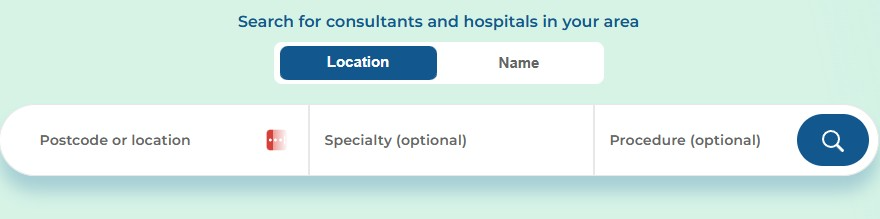
You may want to look for a surgeon who regularly performs your specific procedure, as high volume can be linked to better outcomes.
As well as looking at our hospital and consultant profiles, we also recommend a quick check of the General Medical Council (GMC) online register to ensure they are licensed to practice.
Equally important is the hospital where your surgery will take place. All hospitals in England are inspected and rated by the Care Quality Commission (CQC), the independent regulator of health services. You can see the hospital's CQC rating on its profile on the PHIN website, along with other helpful information.
Once you have a consultation booked, you have the chance to bring these threads together. Being prepared with a few key questions can empower you to make an informed choice.
Questions for your potential surgeon:
- How many of these specific procedures do you perform annually?
- What are your or your hospital's outcome rates?
- Which hospital do you recommend for my surgery and why?
Your action plan: Making an informed decision about private cardiac surgery
- Book a GP appointment to discuss your diagnosis and desire for a private referral.
- Review your finances and/or contact your health insurer to confirm coverage.
- Research two or three hospitals and specialist surgeons who work there.
- Prepare your list of questions for your first private consultation.
Each step you complete builds control and clarity. You should now understand how to evaluate your options for cardiac surgery in the private healthcare sector in the UK, not just on waiting times, but on quality, cost, and personal fit.